Top Tips For Safely Towing A Dinghy
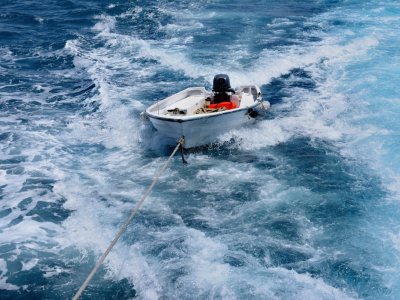
A tender, sometimes called a dinghy, is the small boat used to ferry passengers and supplies to and from a larger vessel like a yacht or motor cruiser. When it's not in use, it's usually towed behind the main boat to save deck space. Towed badly, a tender can fishtail, swamp, or slide dangerously in your wake. Towed well, you'll barely notice it's there.
Safe tender towing comes down to four things: choosing the right tow point and line length, keeping the tender's weight and load balanced, matching your speed to conditions, and checking your tow rig regularly while underway. Get these right and your tender will track straight behind the main vessel instead of sliding sideways or fishtailing in your wash.
Why Tenders Are Towed Rather Than Carried
Larger vessels often tow their tender rather than stowing it on deck, particularly on shorter trips or when deck space is limited. Towing keeps the tender out of the way of crew working on deck while still keeping it immediately accessible when you reach your destination.
Setting Up Your Tow Line Correctly
The most common problems when towing a tender, fishtailing behind the main vessel or sliding sideways down the V-wash, almost always come back to how the tow line and tow point are set up. A bridle attached to two points on the tender's bow, rather than a single point, generally gives more stable tracking. Line length should be adjusted so the tender rides on the back of a wave rather than surfing down the face of one, which is what causes the sideways slide.
Matching Speed To Conditions
Towing speed should be reduced in choppy conditions or when changing course sharply. A tender that tows well at a steady cruising speed in flat water can behave very differently in a following sea, so it pays to slow down and reassess whenever conditions change.
Learning From Experienced Operators
Brendon Grieve of Motoryachts Unlimited, who has spent three decades working in the luxury end of recreational boating, has demonstrated the correct method for towing a tender safely, covering line setup, positioning and speed management on the water. Watching an experienced operator run through the process is one of the fastest ways to pick up the details that don't always come across in a written guide.
Towing a tender safely is a skill that improves quickly with a bit of attention to your rig, your speed and the conditions on the day. Get the basics right and it becomes second nature.
Check out Dinghies, Tinnies and Inflatables For Sale
Frequently Asked Questions
What causes a dinghy to fishtail when being towed?
Fishtailing is usually caused by an incorrect tow point, a tow line that's the wrong length for the conditions, or towing at a speed that lets the tender surf down the face of a wave instead of sitting behind it. Adjusting the bridle and slowing down in choppy water usually resolves it.
Should I tow my dinghy from one point or two?
A bridle running to two points on the tender's bow generally provides more stable, predictable tracking than a single tow point, which is more prone to letting the tender slide sideways.
How long should my tow line be?
Line length should be set so the tender sits on the back of a wave rather than surfing down its face. The right length will vary with sea conditions, so it's worth adjusting rather than using the same length every trip.
Is it safe to tow a tender in rough weather?
You should reduce speed and reassess your tow setup whenever conditions become choppy or you're changing course. A setup that works well in flat water can behave unpredictably in a following sea.