Anchoring - The Very Basics
Anchoring your boat properly is important for safety and convenience. Following a clear sequence, from choosing the location through to monitoring the anchor once it’s set, helps you anchor safely and securely so you can enjoy your time on the water with peace of mind. Before you head out to any anchorage, check the weather forecast and read our guide on which forecast to use (), since wind direction and strength are the two factors that matter most when choosing where to anchor.
How to Anchor Your Boat
-
Choose a suitable anchoring location: look for a location that provides good shelter from wind, waves and current, and make sure there are no underwater obstructions or hazards.
-
Determine the depth: work out the depth of the water at the chosen location, and use an anchor that is appropriate for the size and weight of your boat and designed for the type of bottom, whether sand, mud or rocks, at the anchoring location.
-
Approach the anchoring location slowly: slowly approach the location where you plan to anchor, then stop the boat and let it drift backwards with the wind or current.
-
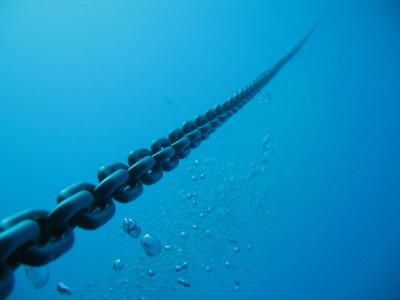
Lower the anchor: lower the anchor to the bottom and let out enough anchor chain or line to provide a scope, the ratio of the length of the anchor line to the depth of the water, of at least 5:1. For example, if the water is 10 feet deep, let out 50 feet of anchor line.
-
Set the anchor: use the boat’s engine to back down on the anchor to set it firmly in the bottom. If the anchor does not hold, try backing down again or try a different location.
-
Secure the anchor line: secure the anchor line to a cleat or other suitable point on the boat, making sure there is no slack in the line and that it is not rubbing against any sharp edges or obstructions.
-
Monitor the anchor: keep an eye on the boat’s position to ensure the anchor is holding securely. If the boat begins to drift, consider resetting the anchor or moving to a different location.
By following these steps, you can anchor your boat safely and securely, and enjoy your time on the water with peace of mind. Make sure your essential safety gear is on board and accessible before you anchor, particularly if you are planning an overnight stay in an exposed anchorage.
In the following video, we watch Brendon Grieve from Motoryachts Unlimited as he explains the very basic Principles of Anchoring for the recreational boater. After forging a career spanning three decades working in the luxury end of recreational boating, Brendon decided to put his experience into his own business hence, Motoryachts Unlimited was established. As a well respected member of the marine industry, during this time Brendon was able to grow a vast network of business partners both locally and internationally.
Frequently Asked Questions
What scope should I use when anchoring my boat?
Aim for a scope, the ratio of anchor line length to water depth, of at least 5:1. For example, in 10 feet of water you would let out at least 50 feet of anchor line.
How do I know if my anchor is holding?
After lowering the anchor, use the boat’s engine to back down on it gently to set it firmly in the bottom. Keep monitoring the boat’s position afterwards, and if it begins to drift, reset the anchor or try a different location.
Does the type of seabed matter when choosing an anchor?
Yes. You should use an anchor appropriate for the type of bottom at the anchoring location, whether that is sand, mud or rocks, as well as the size and weight of your boat.
What should I check before securing the anchor line to the boat?
Secure the line to a cleat or other suitable point and make sure there is no slack and that the line is not rubbing against any sharp edges or obstructions that could cause it to fray.